
great (again)
a serial performance
great (again) is a series of dances that plays with the role of repetition in dance and American society. Think of the demanding rehearsal director in a dance studio.
“Great. Again.”
Think of red baseball caps and the distressing notion that there is some former greatness in American culture that we are somehow attempting to return to.
____ _______ Great Again!
Why is it that we think that because something is great, it must be again? What is the container of “greatness”? (Maybe it’s an “I know it when I see it” situation.)
As Tony the Tiger says, “THEY’RE GREAT!”
Regardless of these answers, great (again) urges a reflection on something’s greatness, and demands its repetition (AGAIN!) even though we can never truly recreate the originating conditions of a GREAT experience. To play with this idea, great (again) is organized into a series of rounds. These not-straight, curvy ideations offer incomplete engagements with pieces of history, institutional structures, and my own dissertation research. It’s unclear how many rounds there are, but they’re numbered just in case.
Are repetitions and rehearsals the same thing? By my read, all things must be rehearsed into existence. To know how to say the words, “No Kings.” We must rehearse the tongue, develop the muscles for elocution, and be trained into a cultural knowledge where kings are that from which we have (supposedly) emancipated ourselves. Did we rehearse for this moment exactly? No. But through extensive study, a series of embodied tools became available for deployment in performative contexts. We put those tools into practice through rehearsal, preparing for when that particular skill might be called upon in a known, or surprising way. It goes from bad to ok. Ok to good. Good to great. Then we do it again and again until it deteriorates.
Great. Again. Again. Again. Again. Again. Again. Again.
round 1
Choreography and Performance: Michael Landez
Music: Wesendonck Lieder, Song 5: "Träume – Studie zu Tristan und Isolde" ("Dreams") by Richard Wagner. Performed by National Opera Studio Young Artists Judith Le Breuilly (Mezzo-soprano), accompanied by Maria Tataru.
The Green Table, composed by Fritz Cohen, performed by pianists of The Joffrey Ballet of Chicago.
Lighting: Sam Bessler
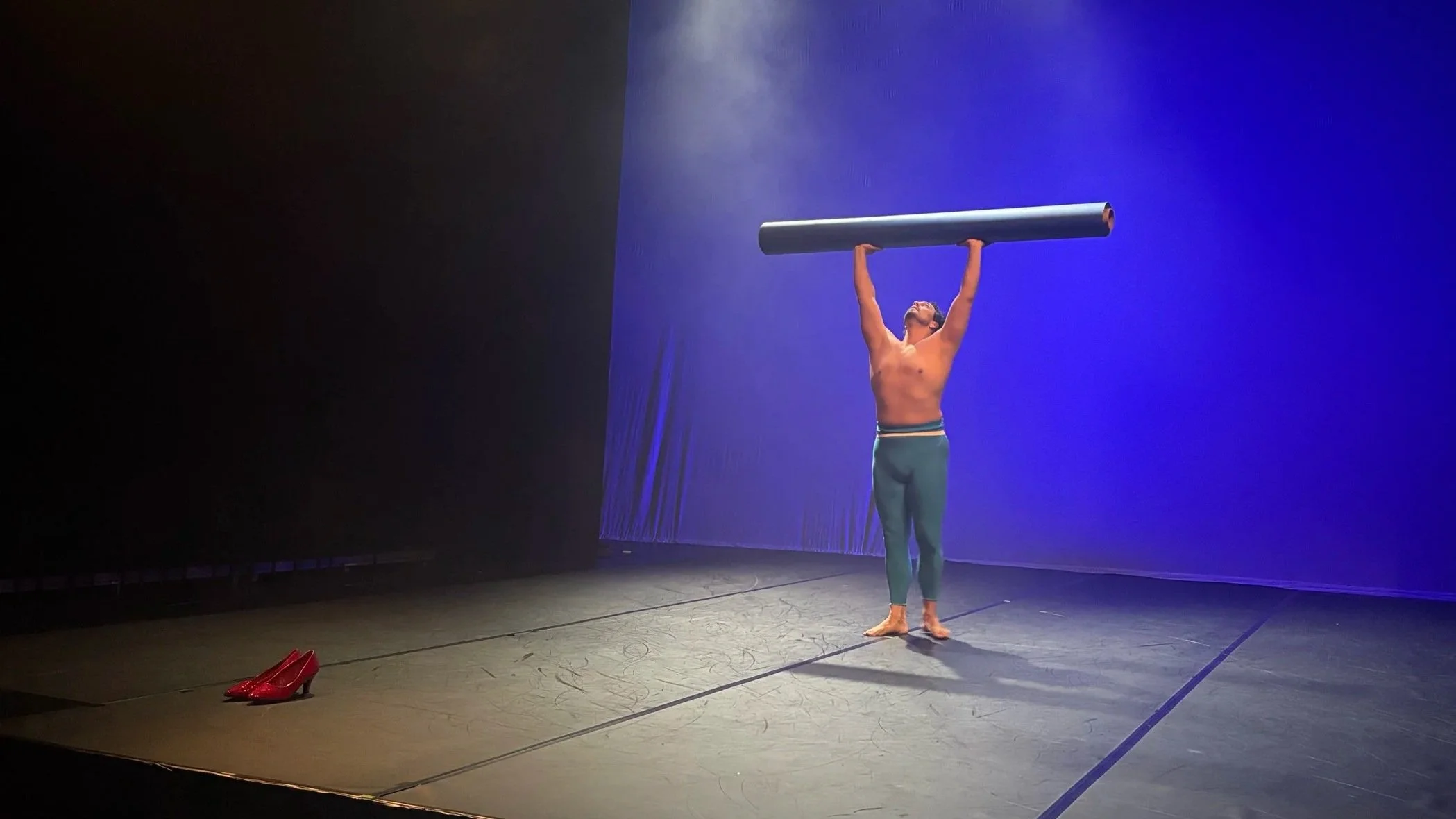
Round one is a play on the notion of archival weight, scholastic analysis of “art objects,” and how ballet wraps itself in a heavy canon of its own making. Stemming from my current dissertation research concerning The Joffrey Ballet from 1965-1995, the round draws from two works in The Joffrey’s repertoire: Robert Joffrey’s Remembrances (1973) and Kurt Jooss’s The Green Table (1932).